Showing posts with label HIV/AIDS. Show all posts

22 March 2011

If you’re gonna have sex, make sure he’s a Jew . . . (and other tales of HIV testing)

nashville AIDS walk 2010
image by Lanecia Rouse

As an HIV testing specialist, I often hear some of the darnedest things whenever I ask people if they’ve had their recommended annual HIV screening yet. I hinted at them in a letter I wrote to “Stigma” a few months back, but my coworkers and I really get a kick out of some of the things we hear, so I thought I’d share them here.

And, believe it or not, I’m not joking or exaggerating about these:

HER: Weeeeelllll . . . I’ll take one . . . Oh, but wait! Where are you from?
ME: Ummm . . . I grew up in South Carolina.
HER: Are you sure?
ME: Ummm . . . yes.
HER: I just want to make sure you’re not from Africa or something putting voodoo on that stick.
ME: Hmmm . . . no ma’am. I don’t know voodoo.

Cue the convulsions and chanting as I did her mouth swab (Ok . . I did exaggerate that part, but I definitely wish I had done that).

+++

HIM: Oh, no no no no. I don’t need a test.
ME: But have you had one before?
HIM: Oh, no no no. I’ve never had an HIV test because I’ve never had HIV.
Crickets.
ME: Well, sir, it’s always good to get a test and know your status for certain, and it’s just a free mouth swab.
HIM: Oh no no no! I know how some people get the flu for a little while when they take the flu shot . . . I don’t want to do anything like that.
ME: Sir, are. you. kidding. me. Are you seriously kidding me? We’re not going to give you HIV for a little while with this voodoo stick.
(ok ok . . . I didn't really say that; I only wish that I had).

+++

HER: Oooohhhh . . . I’ve seen that on CSI before. You’re trying to steal my DNA.

+++

HER: I don’t need a test. I’m not promiscuous.
Meanwhile the young lady sitting next to her has decided there’s no way she can take the test. If she says yes, then everyone will think she is promiscuous.

+++

HER: No, thanks. I’m a Christian. I don't do those kinds of things.
ME: Oh, we test Christians all the time. No worries. And some of them are (gasp!) HIV+ even!
Well, I didn’t gasp, but . . . you know the deal . . . I certainly wish I had.

+++

HER: I’m a mother! And I’ve been married for 13 years! And I believe in God! How dare you come in here and give me an HIV test!”
(slightly paraphrased from my coworker who was yelled at by this married God-fearing woman today)

+++

HIM: Oh, we don’t need tests; Jews and Catholics don’t get HIV.

Awesome.


The moral of this story is, if you’re gonna sleep with someone, clearly Yahweh and Mother Mary are keeping their people in check, so these are your safest bachelors and bachelorettes!

Or maybe the real moral of the story is that everyone has a different sexual story—maybe you are celibate or delaying sex or married to your one sexual partner or have a different sexual partner with each change of underwear. Whatever your story, the story of public health is this: all of us should be tested at least once in our lives, most of us should be tested once each year (yes, even if we’re married, observe the Sabbath or say our Hail Marys regularly) and some of us should be tested every 3-6 months if we participate in high-risk behaviors.

And definitely, if you’re in a setting where someone is promoting HIV testing publicly, never allow any of the above absurd comments to fall from your lips. It does nothing to help get more at-risk populations comfortable with testing, and there’s never a reason to be offended by an HIV test or ignorant about HIV. Simply say, “yes!” It really doesn’t hurt to even get tested again for the sake of public health—especially when there are no needles involved. Or decline if you wish, but do so with respect and say, “but I’m really glad that you offer this free test. It’s important for everyone to know his or her status.”

And HIV knows no race, gender, age, socio-econimic level or religious affiliation, despite popular (or should I say questionable?) belief.

If there are any other HIV testers out there reading this, I’d love to hear some of the interesting things you’ve heard before . . .

28 October 2010

Walking

Walking: that's what I've been doing the past two days.

I walked uphill and downhill. I walked barefoot on smoothly paved roads past manicured lawns, flamboyant trees, a tiny white kid running and chatting with his tiny black friend in Chichewa all alone with no parents in sight, and a number of tall brick walls topped with electrical wiring that protects the foreigners who have chosen these elaborate and expensive homes in this still developing country.


I traipsed around on red dirt paths in my dusty sandals, across wooden bridges with some unhinged slats, stepping over discarded banana peels, skeleton corn cobs and flattened plastic bottles, past homemade signs for fruit stands, tuck shops, more flamboyant trees (my favorite), small homes made of mud or brick or metal scraps, straw walls that would take very little huffing and puffing to blow down, and two tiny Chichewa girls laughing and clapping and singing a little rhyme in English.

This is Malawi--her beauty, her contradictions, her complexities, her roads . . .

Today's walk was with my dear friends of Tiwasunge (Tee-wah-soon-gay). These friends are all HIV+, and they have come together in this community-based organization to care for one another and support each other. These friends are beautiful.

We walked all around Kampala village (the Olivers' neighborhood--they do not live with the other foreigners or "azungus;" they live among Malawians) for home visits, praying with bedridden members of the community and meeting orphaned children whose school fees are paid for by Tiwasunge.

I met Cedric, whose parents both died of HIV. He was fortunate for Tiwasunge to pay his fees through form 4 (secondary school). He applied to university but did not get in. But Lucy says it matters not if he got in or not. "If they don't get into university, we have a problem. If they do get into university, we have a problem," she says. In Malawi, I've met too many young people with dreams and hopes and acceptance letters for their preferred university whose education comes to a screeching halt after form 4 exams. Who will pay for their university fees when they are accepted? For the young people supported by Tiwasunge, Lucy has no answer. The organization just cannot afford the expense. Education is power in Malawi--power over poverty, over disease, power to assist their neighbors, to educate other Africans, to increase the hope on their beautiful continent--and these young people quickly become dis-empowered after secondary school.

I also met a woman who has been bedridden for four months now. We could not mention HIV to her or around her, though that is her diagnosis. She believes she has been bewitched and that she has ways to get rid of it. Which means she's probably not so consistent with her ARV's if she takes them at all when the Tiwasunge friends are not around.

She was lying on a piece of foam placed haphazardly on top of bed springs in a dark, dank room that smelled of mud and smoke and manure. We visited her, prayed with her, gave her fresh bananas. Tiwasunge usually wash their patients, feed them more, take their clothes and wash them, provide medicine. They have used their limited funds wisely on supporting education and food for the orphans, but this means they have not been able to afford all of the materials for home-based care in the last couple of months. The bag I remember them carrying 2 years ago on home visits is now very light. But their spirits and belief in prayer is as strong as ever. And I know they will persevere, that God will provide.

I am tired from all of the walking (literally . . . about to take a nap). But I am also tired from all of the disparity. I am tired of seeing 9-month-old babies who are emaciated and don't look like they've been here a day more than 3 weeks. I am tired of knowing HIV destroys lives daily across the world, especially knowing that it's a disease that people can live with if poverty didn't rear its ugly head.

I am also energized to reorganize Pray With Africa and partner with Tiwasunge. I am energized to see what God will do with Tiwasunge and how I can be a part of their story. I am energized to think more about the way I live and how, without even thinking about it, I contribute to a poverty that kills worldwide.

I am hopeful. God is good. And God is desperately in love with us, God's children. The end of our stories is abundant life, and knowing this gives me hope.

22 July 2010

Letter to Stigma


Free HIV Testing
Originally uploaded by Jeremy Brooks

Dear Stigma,

I tell people they are HIV+ for a living.

More often I am able to tell people they tested negative, which is wonderful. But sometimes I have to tell people they did, in fact, test positive.

I think of myself as an HIV test salesperson. The test is free, so I don’t make money or commission off of each person who gets a test. I’m a “salesperson,” however, because HIV tests aren’t exactly as popular as the iPhone G4. People don’t usually stand in long lines or sleep in the cold overnight waiting to see me. I’ll credit you for that, Stigma.

Instead, I approach people as they wait to see their doctor or dentist at our local non-profit health clinic and try to convince people that everyone should get tested regularly.

“Hello. My name is Ciona, and I’m just going through the clinic getting people started on a free HIV test that we offer if you’ve not had yours this year. When was your last test?”

I get a couple of different responses to this question:

• My favorite: “Let’s see . . . I think it was a couple of years ago. But sure, I’ll take another!”
• Uncomfortable giggle and wrinkled brow, followed by a slowly stammered, “I’ve . . . never . . . had one. I don’t think I . . . need an HIV test . . .” (and occasionally they’ll follow this with a whispered disclosure: I haven’t had sex in 7 years or a very loud I don't do those kinds of things).
• “Oh, I don’t want to know if I have it.” (what?!?!)
• Sheer look of horror as if while traveling from my mouth to their brains, my words transformed into, “Hello. My name is Lucifer, and I’m holding a bottle of the plague in my hand for you to drink."

And, Stigma, I’m pretty sure you’re solely responsible for the last response.

While it certainly feels much better to get to tell someone they are HIV-negative as opposed to positive, I’m pretty certain that a lot of people who don’t even know that they are positive get past me. They are some of the ones who refuse to take the test because they are afraid or because the woman sitting beside them made such a big deal about how she did NOT need an HIV test because she is married and doesn’t do any of those bad things.

So these people who manage to get through may not ever be under the care of an HIV specialist, may not ever take medicine and may not ever know their status until it’s way too late for them to manage the disease and lead a healthy life. Yes, Stigma, all because of you.

And then you creep in and do your work on people who even know they have HIV! I met a man who was emaciated and struggling to even walk. As I rolled him in a wheelchair to go take an HIV test after much convincing, he told me that he did not need a test. He said he already knew his status. He came along with me, however, because he wanted me to pretend to take his test since his sister was there with him and nobody in his family could know he was positive. I obliged because I don't think he should have to disclose his status if he doesn’t desire.

But I was also very sad. This man was not under medical care, he said, because he did not have a car and didn’t want his family to drive him to see the “AIDS doctor.” He was choosing death over telling his family he had HIV.

Stigma, you are doing a great job of helping AIDS kill people. That’s right; I’m calling you an accomplice to murder.

Would you consider retirement? Could you consider letting go of your rank so that people who may not be at risk for HIV would get over you enough to just go ahead and make an HIV test a routine practice? Then this might help normalize it for those who are at a greater risk but are nervous to step into a clinic and ask for a test. Could you consider going away so that people could feel more comfortable saying that they have HIV without people judging them or their behaviors and actually get the medical help and emotional support that they need?

Would you please die instead of killing others?

Awaiting your departure,

Ciona

24 June 2010

Summer's Winter

I’m very aware of death whenever I leave the continent of Africa. This is not necessarily because of seeing so much pain and dying. I think it’s actually because I witnessed so much aliveness! So each time I leave, I’m aware that anything can happen between the moment I leave and the moment I return to the continent. Death can creep into all of that aliveness so unexpectedly. Every once in a while, winter finds its way to summer.

There’s Joseph—so strong, so resilient, so much going for him. I expected to receive emails about the day he was coming to the U.S., sponsored by New Balance, to run in a major race. Or sweet baby Kofine whose body was frail, but who I thought had a chance at life with the year’s supply of food that was given to her family and Peter’s constant care for them. So when I received messages this past year that both Joseph and Kofine died as a result of poor access to good medical care, my heart froze. What seemed like summertime in their lives was a lie.

Then there’s Marion in Malawi and Lavergne in South Africa—both HIV-positive. Honestly, despite my prayers, I expected both of them might breathe their last breaths maybe before I even landed back stateside in 2008. But when my sister went to both countries this past March—nearly two years later—she returned with images of both women standing, smiling, surviving . . . so beautiful! A summer revival in what I thought were wintered lives.

But in the midst of summer, came winter. And I learned this week that Marion died a few days ago.

the Winter pins me
for a moment, my Summer thoughts had consumed me,
convincing my mind they would not forsake.
I imagined the sun would kiss my skin again, leaving it sticky
I promised to call it a beautiful residue
I pictured walking with my head high, slicing
through summer’s thick air
smiling at couples in sandals
holding hands and sipping lemonade
on a sweet summer stroll
but then Fall and I met, he erased
the summer’s cicada songs from my memory
and lied to me
never warned me of December’s early coming
my limbs were captured, encased by ice
it was almost beautiful—a crystal tree
if it were not also a prison to my bones
I shivered, unable to escape cold
even then I believed I might tiptoe into Spring
quietly like a kid sister returning a diary or a
sundress she never asked to borrow
then February
seized my body
refusing to let me March
now I watch snow fall on skeleton trees
and concede to Winter’s heft
while birds learn morning tunes and tulips bloom
in someone else’s yard

3 july 2004


A few months ago I had the idea to write a poem about HIV/AIDS and seasons. I played around with a few words. Then this week I found this poem , and I’d written it in 2004—untitled, but the (very poor) working titles were “Death of AIDS patient” or “Living with AIDS” or “Dying with HIV/AIDS.” How funny to have an idea this year that I actually had in a writing group one time 6 years ago. I honestly didn’t remember I’d written it. My friend calls it self-plagiarism. I find it fitting to have found it just hours before my friend Kara called to tell me of Marion’s surprising death. And so I share it today in her memory. (I think I'll title it "Winter Song: An AIDS Lament." Maybe.)

I leave you with Marion’s prayer request Lanecia collected back in March:

My prayer is for my family. I pray that God should give me a house. When I was very sick Tiwasunge took care of me. I ask God to continue guiding them. As I'm still strong I ask God to give me capital so I can relieve the burden on Tiwasunge because I have 7 kids. I pray God should bless Tiwasunge. Amen.


May we experience many more springs and summers than fall and winters. But may we accept the cycle of all things and live fully into whatever season life has given us this day.

03 October 2008

Nashville AIDS Walk


One of my dear friends and many people who I have met and love are HIV+. So I have joined a team for Saturday's AIDS Walk for Nashville. I have been a volunteer at Nashville CARES, and they do some major work for people in the city who are HIV+. Any small donation you give will go a long way as they feed someone who is sick and needs nutrition, drive someone to the doctor, counsel someone who is recently diagnosed, bless children of HIV+ parents during Christmas, test people for the disease, educate about HIV/AIDS prevention, and the list goes on . . .

I would love for you to go to the site and donate whatever you can--$1 or $10 or more--to sponsor me as a participant (click the red "sponsor participant" button on the page and enter my name). Or if you want to sign up to be a virtual walker on our team, you can do this, as well by clicking the "register here" button and joining the team called "Affected." It's only $30.

ThAnKs for your support!

13 April 2006

Ahhh . . . Maundy Thursday


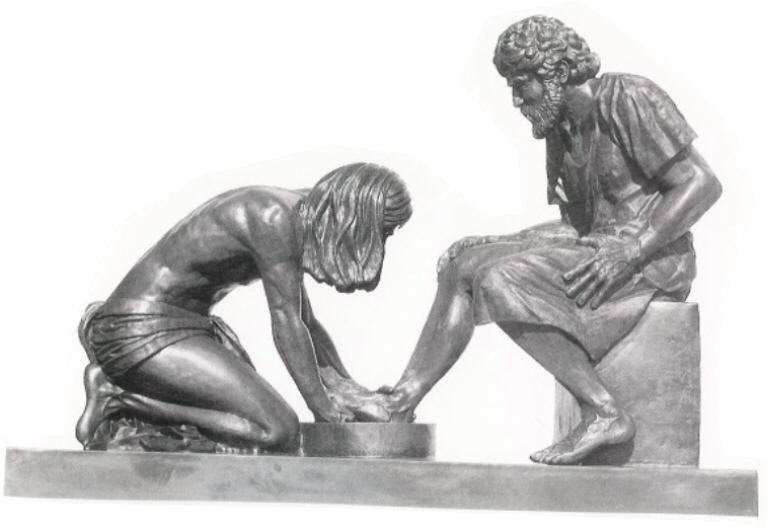
It's that service I think is ever so important in Holy Week, but really I usually just struggle. Because on Thursday I know I'll have to remove my shoes, reveal my feet and let someone (who is not a trained pedicurist, mind you) touch them. Even worse, depending on how the worship is shaped, I just may have to touch someone else's revealed feet, as well! Each year I cringe. But I also have deep respect for the humility of the Christ in this situation. It takes a lot of deep love and humility to wash the disciples' dirty, nasty, "we've-walked-in-sandals-all-across-the-dusty-land-following-Jesus" feet.

I did not cringe this year, however. I rolled the hem of my jeans and was served. And I served my sister, as well. And I remembered a young man in Johannesburg. He was an angry young man, as he was bedridden as a result of disease. And his feet were bandaged. His body was bandaged to cover the many bed sores taking over his skin. We walked into his room, and they handed me supplies to remove his bandages and to wash his feet.

The "we" who went to this man's home with me are a group of young South Africans who daily walk the dirt streets and sometimes through the "bush" to get to people's homes who were suffering HIV/AIDS and other house-ridden disease. Their daily lives consisted of great humility to bring vitamins and food to those who could not leave, to sit and talk to those who were now ostracized and to, of course, wash this man's feet and the rest of his body.

I remembered them this year as we sat in the sanctuary this Maundy Thursday. I thought of their passion--a passion that is, indeed, the passion of the Christ. I remembered this man who could barely speak English and how he let me wash his feet. And I remembered Jesus who daily serves me, a foolish soul certain to betray and beg for forgiveness. I remembered, and I washed and was washed.

And not once did I cringe.

How beautiful are the feet of those who bring good news! Rom. 10:15

I'd love to hear your feet-washing stories . . .

07 March 2006

"Can't exactly tell the church choir"


"I hope this doesn't offend you," he said, "but, you see, I'm HIV+."

I stood shivering outside with a man in my neighborhood today when he said those words to me. We don't talk often, but we've talked before, sharing stories about how the perils of freelancing will never outweigh the joy of doing what you love. Today, I asked how he was doing because I've been concerned for him for weeks. The day after Valentine's Day, I could hear him outside yelling into the telephone, saying that he wished it would all go away.

So when I asked how he was doing, he knew that I'd heard him before. He was much better, he said. And as he explained his depression, I guess he wanted to tell me that the source of his sadness was his illness. Yet, he felt the need to state his non-offense before speaking the words.

I've never known anyone to say, "No offense, but I have cancer." "Please don't be offended, but I have heart disease." "I hope this doesn't upset you, but I have diabetes."

I told him I led a workshop in Memphis Saturday about HIV/AIDS. His eyes smiled relief. We talked for a while, and as he left my house he said, "I can't tell you what a blessing this is." He told me that he feels so lonely with HIV. His friend with cancer is surrounded by support. "You can't exactly tell the church choir you have HIV, though," he said.

Why can't the choir handle it?

01 December 2005

World Aids Day


Eunice is Isaac's mother. He's about 30 years old. I do not know Eunice's age. They both are HIV+ and ridiculed daily in their Johannesburg community. Surely Isaac slept with his mother and passed it on to her, people say.

Kevin is married in a South Carolina town. He has to reveal to his wife that he contracted HIV from someone else.

Angeline is frail and living with HIV. Everyday she cares for other HIV/AIDS patients in her community in Johannesburg, though, walking long, dusty streets in spite of and maybe because of her disease.

Larry, a Britishman, quits his suit-and-tie job and begins educating children--British and South African--about HIV/AIDS after discovering he contracted the disease. MADaboutART was birthed.

These people I've met and millions upon millions of others I will never see live with HIV/AIDS daily. Remember them today and everyday. Pray for them. Write letters encouraging our nation to support them.

People live with and die from AIDS. It's not easy to face this fact. But we must. We must face it each day.

17 July 2005

Cameras, Refugees and Prayer


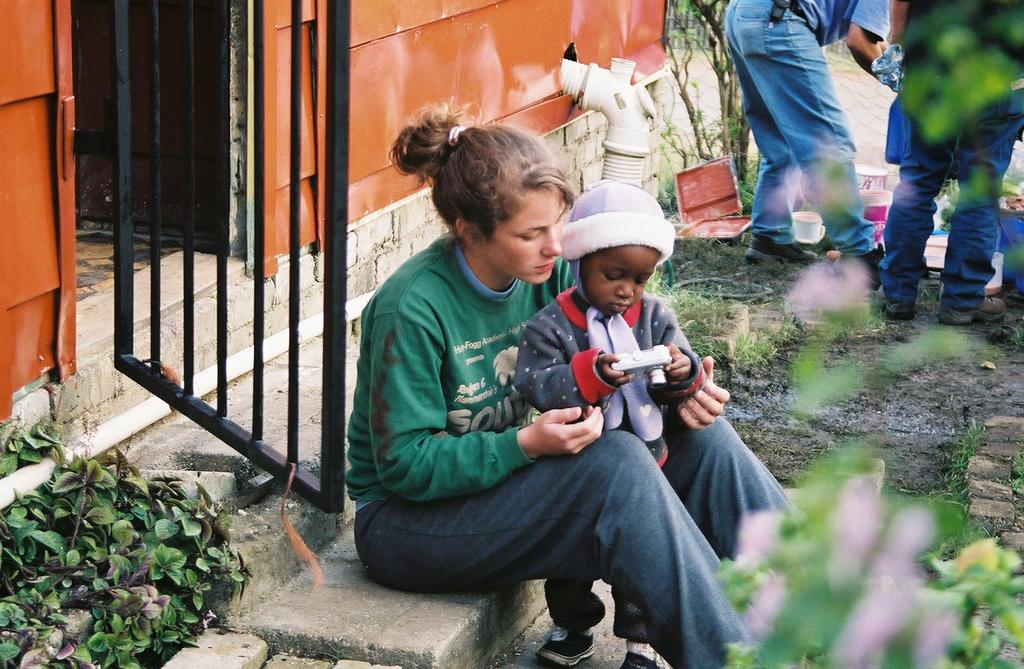
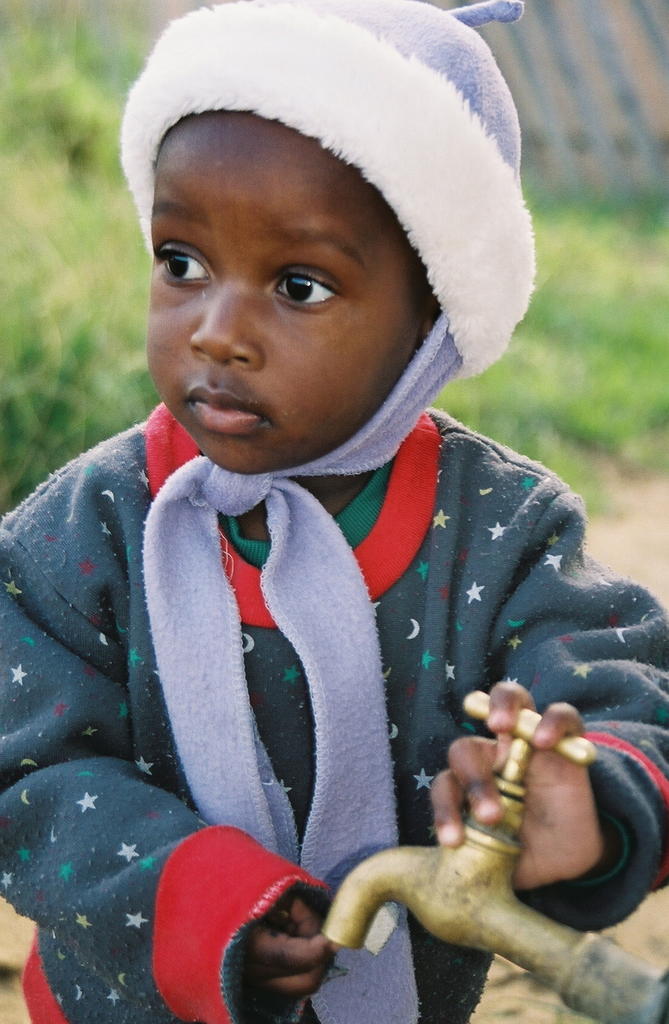
In this photograph Liza (18-year-old Belmont youth) is showing 2-year-old Nestashine a photograph on the digital camera. The children we got to know all loved the digital cameras. They were terribly disappointed when I pulled out my Nikon SLR manual camera with the 35mm film. I'm sure they were thinking: "What kind of American are you? It's 2005 and every American owns a digital camera!" I think I became acceptable again, though, when I used the Polaroid camera and let them keep the photographs.

Anyway, we met Nestashine when we worked to paint a creche (preschool) in the Khayeletu township in Knysna, South Africa. Her father Innocent is a sculptor who sometimes gets work with a painting business if they need a paint job done on a building. Since we were painting the creche, Innocent became our friend, helping us get the work done the entire two days.

So we spent only two days with Innocent, his wife Linah and his daughter Nestashine, but we tried our best to get to know them. They moved to South Africa fleeing Harare, Zimbabwe. He talked about how dangerous it was there sometimes with the government just coming in and threatening families, knocking down homes, harassing entire communities. He's not making much money, but he's working hard. So he's found his peace in South Africa but almost got an opportunity to come to the USA for work. He's still praying for that opportunity.

I met a number of refugees into South Africa. Since South Africa's freedom and new government in 1994, people from war-torn countries on the continent of Africa have fled to the Republic of South Africa. I met Germain early in our trip when we visited a restaurant in Cape Town where he worked as security. Germain is from the Democratic Republic of the Congo, and we talked for a while as I waited for the rest of the group to meet me at the restaurant. Our conversation covered many different topics from what his neighborhood was like to why our group was in South Africa. He let me practice my French. We talked about churches.

When I finally asked about the tension in the Congo, he said that rebel fighting in parts of Rwanda, Burundi and the DRC had gotten so bad it was terrifying. I asked if he had family there still or if they came with him to South Africa. He then told me that his family--wife and two tiny girls--were killed by rebel forces. After their deaths, he became a refugee in SA. He has a university degree he acquired in the DRC but can now get only this job to start his new life. But he says that God is blessing him. And he sends money home to his mother (who was too old and ill to flee with him) whenever he can.

On another note . . . A few days after meeting Innocent and family, we met their neighbor Robert at a marketplace selling his things. He shares an HIV infection with his baby boy Joseph. He was thrilled to finally meet the people from the UM Church that he'd heard Innocent talk about. Why? Because he wanted to know if we'd pray for his family: wife Elizabeth (not HIV+) and child Joseph. I hope you'll join me in prayer, too.